

By Iris Craige, Assistant Director of Policy and Research
August 12, 2026
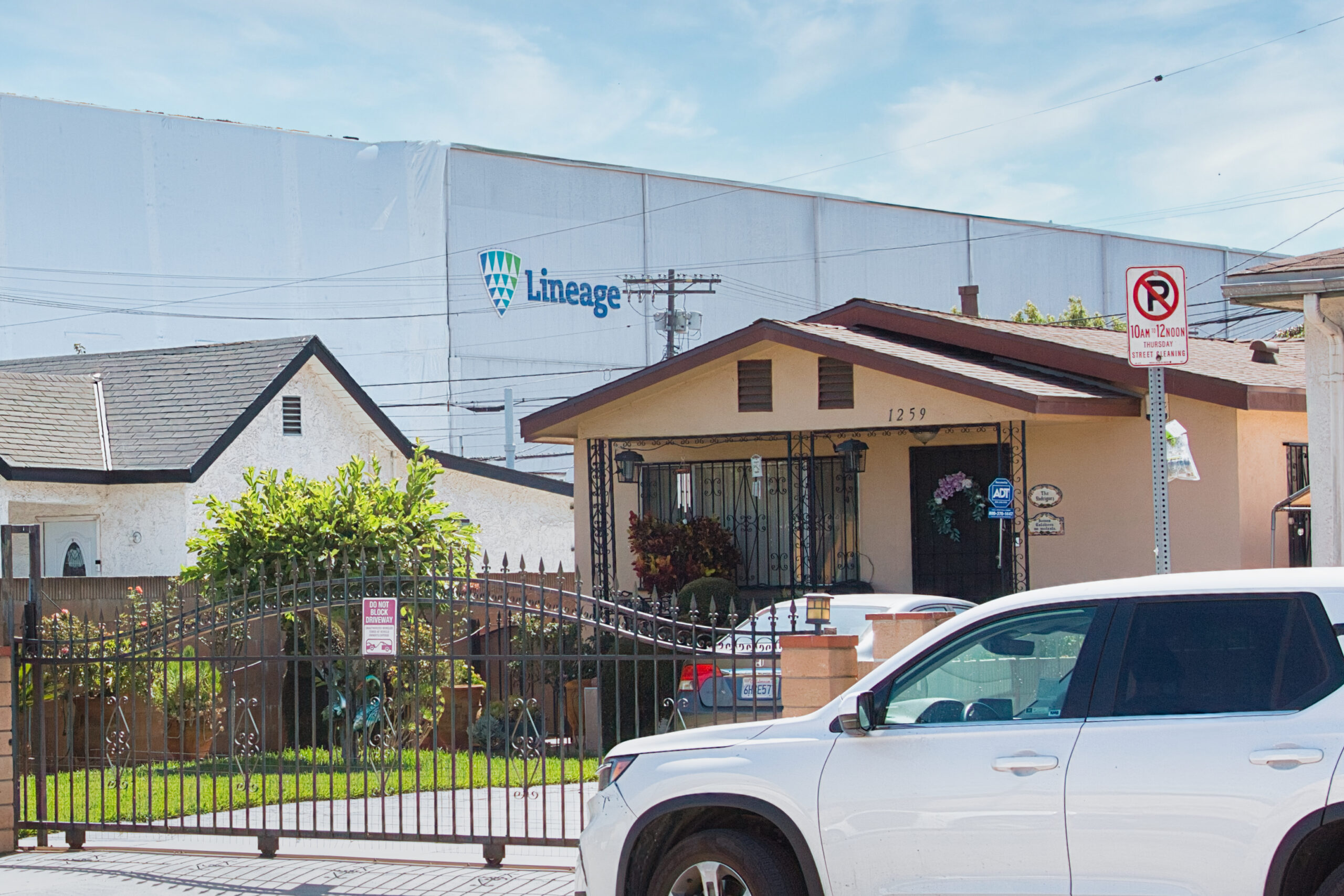
On June 17, 2026, a fire broke out at the 500,000-square-foot Lineage cold storage warehouse facility in Boyle Heights. Over the next eight days, the fire burned continually, until firefighters declared it “knocked down” on June 24. By that time, roughly half of the facility had burned, leaving an estimated 85 million pounds of frozen and refrigerated food, from seafood to poultry, to spoil. Los Angeles Mayor Karen Bass and California Governor Newsom both declared states of emergency. Boyle Heights residents were told to shelter in place. The smell of rotting food, flies, and vermin have plagued the neighborhood in the weeks since.
The Lineage fire might seem like an isolated industrial disaster, but many Angelenos understand it as yet another example of how land use decisions have concentrated harmful polluting industries in predominantly working-class communities of color, decade after decade.
Boyle Heights did not become an industrial center overnight. During the early 20th century, manufacturing, warehousing, and freight infrastructure expanded along the Los Angeles River. In 1908, the city began creating manufacturing districts while at the same time prohibiting industry in specific residential districts. Zoning rules protected predominantly white, middle- and upper-class neighborhoods from factories and other industrial uses while concentrating them in working-class areas. Boyle Heights fell on the industrial side of that divide; already home to working-class immigrant communities, it sat near the Los Angeles River, major railroad lines, and Vernon, a neighboring industrial city, so it was deemed a manufacturing district. Existing warehouses and factories were allowed to remain near homes and new ones were built, a pattern that became increasingly entrenched over time.
Housing discrimination and major public infrastructure projects deepened the pattern. Restrictive covenants excluded residents of color from many L.A. neighborhoods, making Boyle Heights one of relatively few places where they could live. Federal redlining then restricted access to mortgages and investment in Boyle Heights itself. As a result, residents of color who were excluded from other parts of L.A. increasingly lived in a neighborhood where homes and industrial uses already existed side by side.
Between 1943 and 1960, four freeways were built in and around Boyle Heights, displacing thousands of residents and making the area even more attractive to freight and industry. At the time, zoning laws made it easier for warehouses and other industrial businesses to continue locating there. Today, 26 percent of Boyle Heights is designated for industrial use, compared with eight percent of L.A. overall.
Unsurprisingly, then, the Lineage fire is not the first industrial disaster to hit Boyle Heights. The warehouse is located in the Exide Buffer Zone, a 1.7-mile radius around the former Exide Technologies recycling plant in Vernon, which has been polluting surrounding communities for decades. Since 2018, California has allocated over $500 million to remediate the land. Last year, LA Public Press reported the Department of Toxic Substances Control had conducted a majority of the clean ups, but a recent study from UC Irvine showed 70% of homes deemed remediated still exceed the state’s soil lead threshold. Nearby homes outside the 1.7 mile clean-up radius also have unsafe levels of lead contamination.
Though the Lineage fire and Exide contamination are different events, they result from the same problem: Neighborhoods like Boyle Heights continue to shoulder a disproportionate share of the environmental risks because of the way L.A. has planned, zoned, and invested in land.
L.A. officials should keep this history in mind. On Monday, July 27, Lineage filed a permit application to rebuild the warehouse to its original, pre-fire condition, with no proposed change to size, use, or occupancy. This would return the same industrial operation to the same location, across the street from housing.
The ownership and oversight of the site are fragmented, making responsibility difficult to follow. Chill Build Los Angeles I LLC owns the property, while Lineage Logistics PFS, LLC operates the cold-storage facility as a tenant. A third company owns the rooftop solar system. After the fire, Chill Build said that Lineage was responsible for maintaining and repairing the facility, while city enforcement orders were issued to Chill Build as the property owner.
Public oversight is fragmented as well, with different agencies responsible for different aspects of the disaster and remediation. The Los Angeles Department of Building and Safety handles code enforcement and reconstruction permits. Los Angeles City Planning determines what zoning and use rules apply to the land. Los Angeles County Public Health oversees sanitation conditions, and South Coast AQMD regulates air pollution and odors.
Los Angeles City Planning recently completed the Boyle Heights Community Plan update, which goes into effect on August 20. The plan attempts to balance two priorities: protecting industrial land as a source of local jobs while reducing the harms that industrial activity can pose to nearby residents. It preserves much of the neighborhood’s industrial land, but adds new protections intended to limit pollution and improve compatibility between industrial and residential areas.
Mayor Bass has directed city departments to pause the Lineage application while the property and its possible future uses are reviewed under the plan. That review should consider the full Lineage site: its ownership, operating history, public health violations, scale, zoning, and proximity to housing. Rebuilding the warehouse exactly as it was would preserve decades-old land use decisions that continue to expose working-class people of color to environmental harms. Boyle Heights residents should not be forced to absorb yet another environmental hazard created by a land use system that has disadvantaged their communities for generations.
Want to learn more about land use in L.A.? Zoning for Equitable Development (ZEDs) is a new SAJE initiative for Angelenos who want to plug into the housing policy space but don’t know where to begin. We invite you to be part of this conversation! Contact Antonio Hernandez at (213) 255-6867 or at ahernandez@saje.net to get involved.