

By SAJE Staff
January 8, 2026
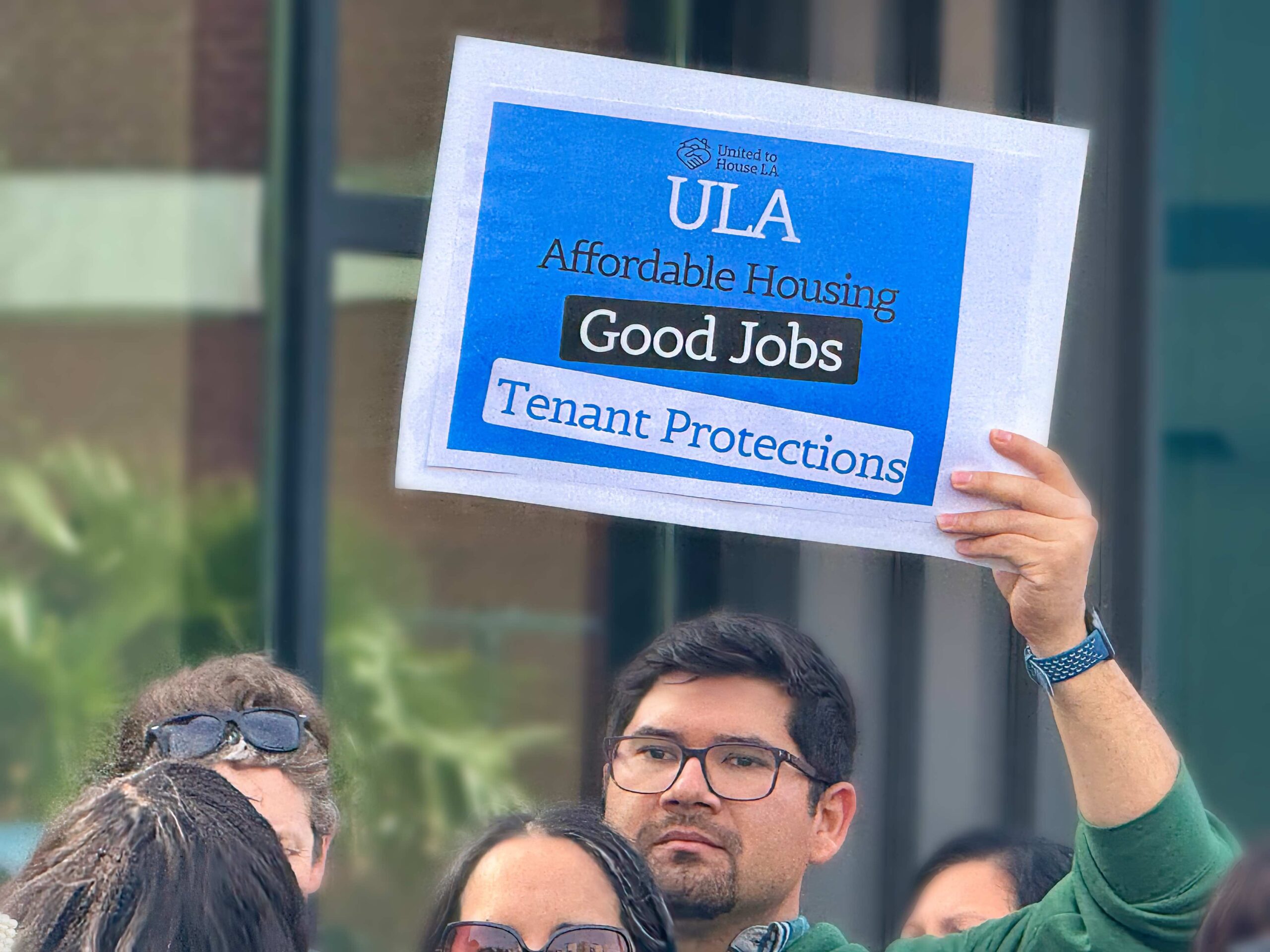
In December 2025, Measure ULA officially hit the $1 billion mark, a milestone in the City of Los Angeles’ efforts to build affordable housing and prevent homelessness. In fact, just two years into implementation, ULA is now the largest local housing and homelessness-prevention initiative in the United States.
If you live in Los Angeles—and especially if you rent—it doesn’t take much to realize that we need an ambitious, long-term plan to address our severe lack of affordable housing. Approved by voters in 2022, ULA levies a one-time transfer tax on properties that sell for over $5.3 million to create a permanent funding stream that can create a lot of housing quickly—capital we’ve lacked, until now. Seventy percent of the money ULA raises goes towards housing production, and the remaining 30 percent toward homelessness prevention.
Having the better part of $1 billion and counting to fund affordable housing construction is unprecedented. For example, in September, the Los Angeles Housing Department released $387 million for affordable and social housing projects—that’s more than five times what they typically allocate to developers. And, ULA funds can be leveraged with other state and federal funds to produce more affordable units overall. ULA is transformational, allowing L.A. to build housing at the scale and speed we need to ensure all Angelenos have a safe and affordable place to call home.
But we need to let it work.
Predictably, real estate interests aren’t interested in allowing ULA to work. Unable to sue it out of existence, they continue to cast it as a villain responsible for a litany of evils while conveniently overlooking the many microeconomic factors that continue to affect real estate transactions not just in Los Angeles, but across the nation: interest rates, construction costs, and rising insurance costs, to name a few. Their simplistic narrative obscures the fact that:
- Transactions and revenue keep going up: According to the Los Angeles Housing Department ULA Dashboard, the number and value of transactions subject to ULA have increased almost every quarter since Los Angeles began collecting the tax (the wildfires account for a dip in early 2025).
- Construction permits keep going up: The most recent Hilgard report shows that residential construction permits in Q3 of 2025 were 60% higher than the same period a year before, and also showed quarter-over-quarter rises throughout 2025.
- CHIP applications reveal pent-up demand: The Citywide Housing Incentive Program (CHIP) rezoning brings opportunities and incentives to build more and make more money. Within six months of Los Angeles passing CHIP in February 2025, the city received applications and pre-applications for 115 projects proposing 16,659 homes, according to the Department of City Planning.
- Housing entitlements show a steady climb. Critics claim that permits have fallen, but the Department of City Planning reports that entitlements rose 52% from 2022–24.
It’s also worth noting that real estate agents typically receive commissions of between five and six percent on property sales—roughly the equivalent of ULA’s assessment—and no one is accusing them of destroying the housing market, or asking them to take less. In other words, don’t let the real estate industry fool you: ULA deserves to be celebrated, not vilified, as the bold solution to building the affordable homes Los Angeles desperately needs.
Now let’s let ULA work!