By Iris Craige, Assistant Director of Policy and Advocacy
November 3, 2026
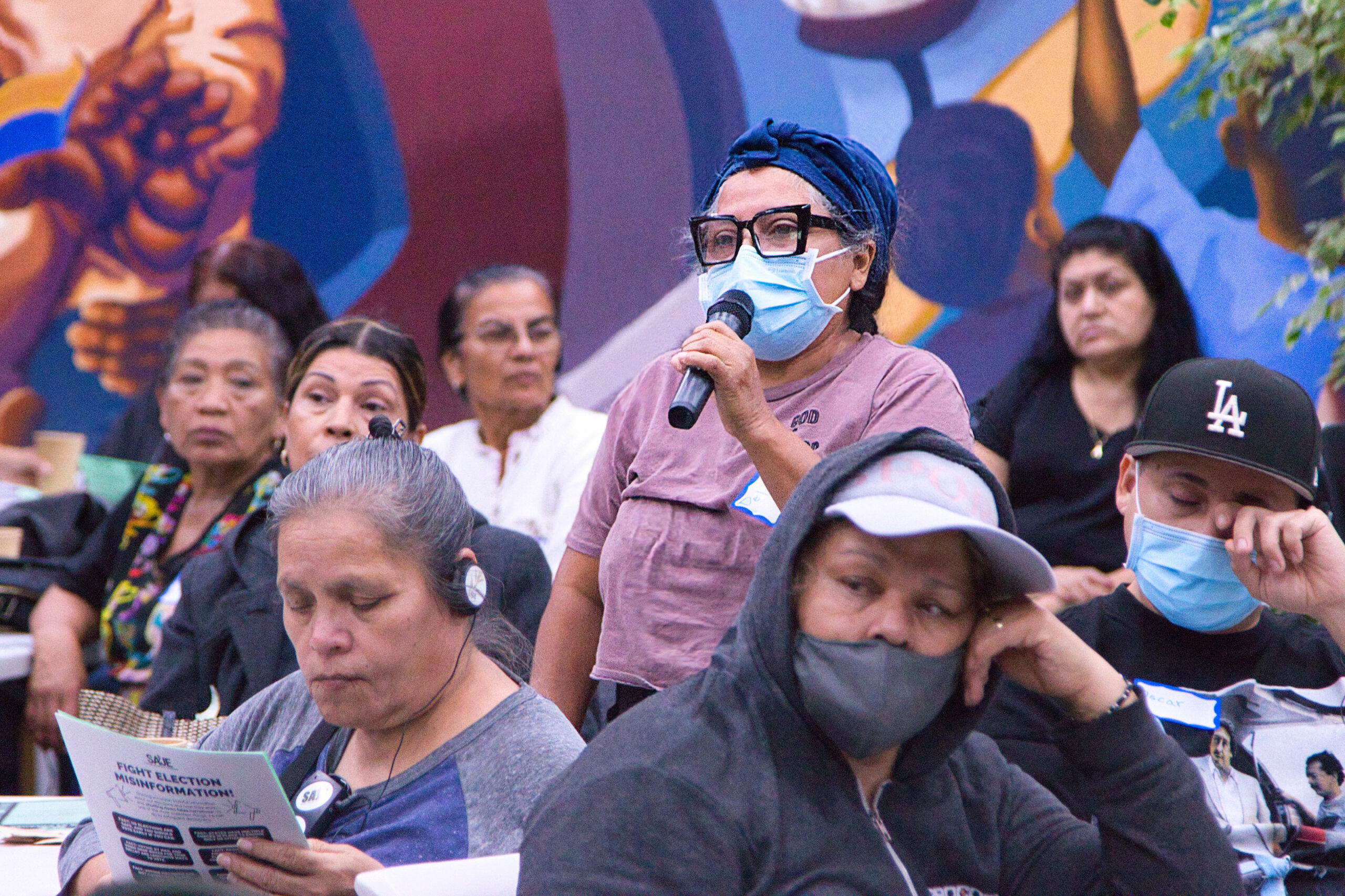
Last week at SAJE, we hosted our Escuelita and General Membership Meeting. Escuelitas are a dynamic learning space where SAJE members and the public have the opportunity to engage with topics related to economic justice. Our General Member Meeting brings together SAJE members to update them on SAJE campaigns and priorities.
For our meeting, we brought community members together to learn about the November ballot and how to sort reliable information from campaign messaging. We started with a grounding activity and conversation about voting, then watched a skit that personified Propositions 40, 41 and 42. As each measure made its case, members debated the arguments and what the propositions could mean.
We wanted to provide clarity around three measures tied to the ongoing debate of taxing extreme wealth: Proposition 40, which would create a one-time tax on billionaires to fund health care and education, and Propositions 41 and 42, which would affect it. Though Proposition 41 is framed around special tax audits and accountability, it includes a provision that could block Proposition 40 from taking effect if both pass, but Proposition 41 receives more votes. Proposition 42 would prohibit new taxes on personal wealth, including investment assets, but it also includes a provision that could nullify Proposition 40 under the same conditions.
We also unpacked the difference between a regressive, progressive and special tax. “Regressive” describes who carries the burden relative to their income, while “special” means the revenue is set aside for a specific purpose. Measure FD would be a special tax because it would fund the Fire Department, and regressive because sales taxes take a proportionally larger share of income from lower-income households. Proposition 40 would also be a special tax, directing most of its revenue to health care and the rest to food assistance or education-related programs. It would be progressive because it taxes the wealth of billionaires.
We closed by affirming that voting is one way to shape our future, and community power extends beyond the ballot. Everyone’s experience and voice matter, whether or not they are eligible to vote. Members left with tools for checking ballot claims, asking who benefits from a measure, and continuing these conversations with neighbors so more people can make informed choices and hold decision-makers accountable.