

By Mariana Paredes Luna, Assistant Director of Organizing and Advocacy
Feb. 24, 2026
Last month, LA Metro launched a Care-Based Services division inside their newly formed Department of Public Safety. This division merges the agency’s outreach and response teams to promote collaboration and provide specialized responses to safety incidents rather than solely relying on police to address them.
Metro Ambassadors (green shirts!) help riders navigate the transit system so they can get where they need to go. Ambassadors also work as a bridge to Homeless Outreach Management and Engagement (HOME) staff by reporting maintenance, cleanliness, and safety issues they observe. HOME (purple vests!) and Community Intervention Specialists support people experiencing homelessness by connecting them with city and county resources such as meals, hygiene kits, mental health and substance abuse treatment, and housing navigation. Together, these teams are trying to shift unhoused Angelenos from relying on bus shelters or subway stops for shelter by guiding them to appropriate services.
This new approach to public safety prioritizes care-based strategies over arrests and incarceration. While we applaud LA Metro for moving in this direction, we remain concerned they continue to use fares and fare enforcement as a means of enforcing public safety. The agency recently installed Tap-to-Exit and taller faregates across fourteen stations, claiming these investments will increase revenue and deter crime.
But who do fares actually deter from riding? Our research shows the majority of LA Metro riders are working-class people of color who are financially burdened by the region’s high housing and transportation costs. During the COVID-19 pandemic, when Metro was fareless, these riders used the bus more, and had more money for household essentials like food and rent. But when that temporary fareless program ended, they rode the system less.
L.A. Metro has a unique opportunity to support working-class riders by reenvisioning the Low-Income Fare is Easy (LIFE) program as a fareless program. Currently, riders who report an annual household income under $50,000 qualify for LIFE; in 2022, that was approximately 83% of Metro ridership! Most who qualify get free unlimited rides for the first 90 days (riders who live in South L.A. and Pomona receive free unlimited rides for the first six months), and then 20 free rides each month after. We’d like to see everyone enrolled in the LIFE program ride for free, all the time.
A universally fareless LIFE program is achievable because fares don’t fund LA Metro, public money does. More than 70% of Metro funding comes from sales tax and federal and state grants. Fare revenue makes up less than 5% of LA Metro’s operations budget.
Plus, removing fares can actually improve public safety. Other cities that have adopted fareless systems have seen ridership increase quickly and dramatically. Buses, trains, stations, and stops are filled with more people who can monitor what’s happening. Riders don’t have to wait for the bus alone or traverse an empty subway station during off-peak hours.
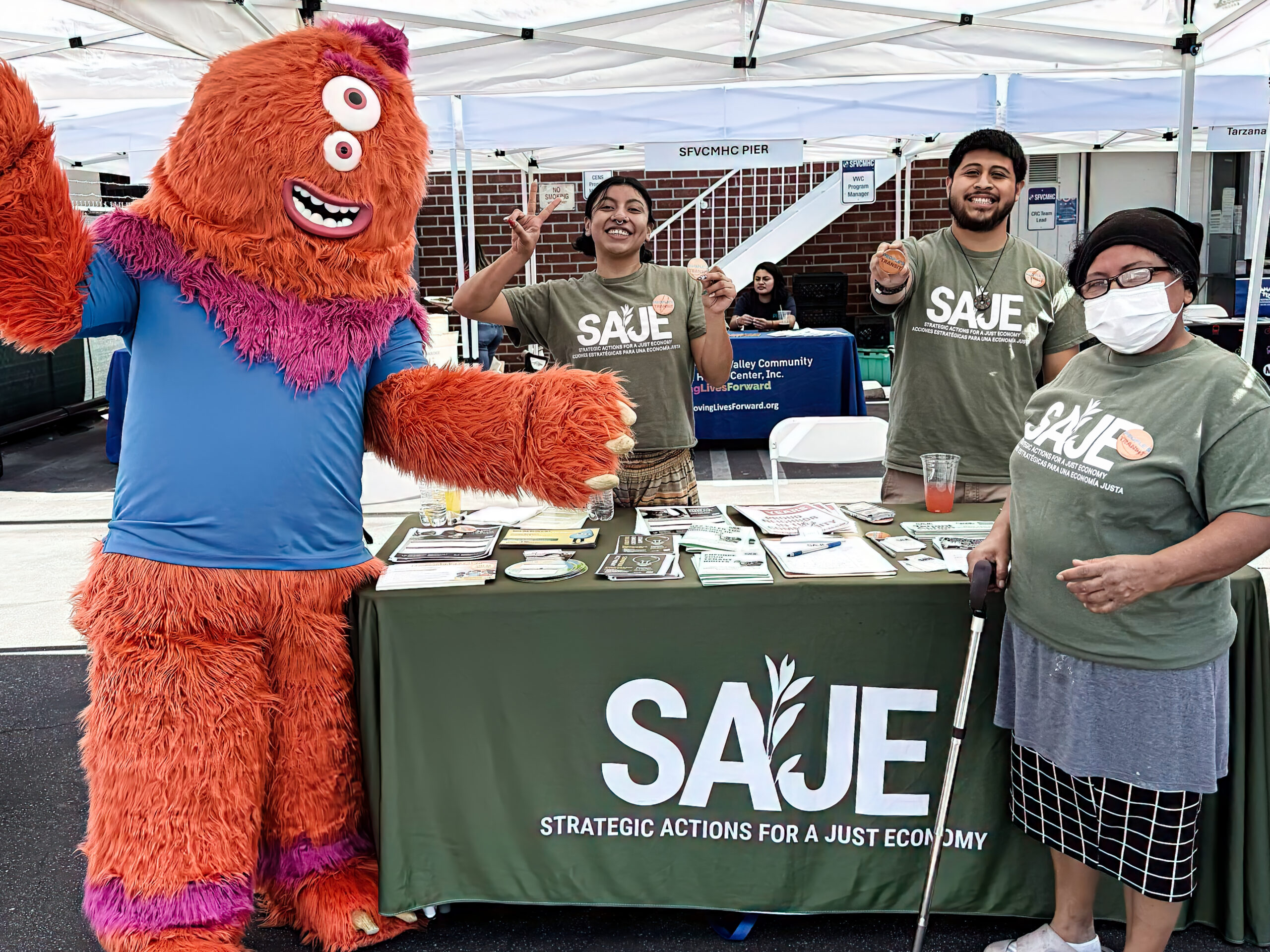
To learn more about SAJE’s work to expand access to the LIFE program and advocate for community-oriented approaches to public safety, contact Community Organizer Carlos Gonzales at cgonzalez@saje.net.