

By Mia Geiger, Climate and the Built Environment Intern
September 29, 2026
L.A. is prone to moderate flooding when it rains, as water flows down from the mountains that surround the region and into the L.A. basin. (This is part of the reason the Army Corps of Engineers paved the Los Angeles River to create a flood control channel in 1938.) Anticipating this year’s “super” El Niño, climate scientists are predicting more than double the yearly average rainfall in L.A.—at least 30 inches rather than the typical 14 inches—meaning this season’s rains could bring some of L.A.’s worst flooding in decades.
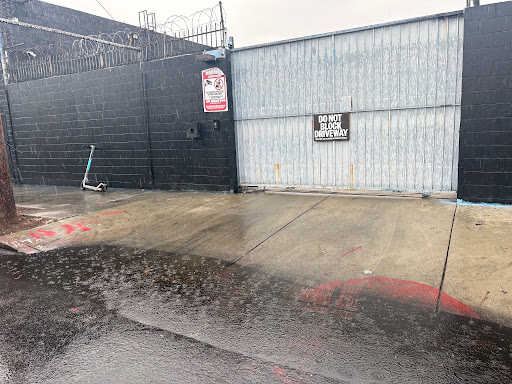
The scale of urban flooding during a heavy rainstorm is largely affected by the permeability of the built environment. Rain water naturally moves between the atmosphere, our oceans, lakes, rivers, and streams, and underground. But in the dense concrete sprawl of L.A., water is blocked by nonporous, watertight pavement. In fact, Los Angeles County contains more than 312,000 acres of pavement, “an area so big it would form California’s largest city.” According to L.A.’s 2020 flood management plan, 61% of the city’s non-mountinous land cover is composed of materials that are impervious to water. We could be in for a difficult, wet winter.
Without an abundance of soil and native bushes, plants, and trees, it will be harder for L.A. to take on wet winters, not to mention the fires that increase flooding vulnerability, both of which are becoming more frequent and more intense as the climate changes. Soil holds rain water and allows it to flow to the water table and other subterranean aquifers. Plants are able to store water, and their roots stabilize porous ground to be able to absorb water without displacing the soil. In Southern California, a biome known as the chaparral, an ecosystem of low-growing shrubs and bushes, helps prevent flooding and erosion by slowing down surface runoff, capturing rainwater, and stabilizing steep slopes with deep roots. But chaparral cannot thrive in areas covered by concrete.
L.A. has multiple concurrent problems with its built environment that could make El Niño flooding worse. According to a 2026 analysis by the Trust for Public Land, L.A. ranks 93 out of the 100 most-populous cities in the US in terms of parks quality and access, showing just how much greenspace we lack. And the city’s working-class neighborhoods, including much of South L.A., have significantly less green space than more affluent neighborhoods. And L.A.’s steep hills are susceptible to erosion and mudslides, with Altadena and Pasadena especially vulnerable because of the 2025 wildfires. L.A. also contains 650 miles of concrete freeways, arteries that connect our homes to workplaces, schools, hospitals, and other essential spaces. When roads flood, it can have a severe impact on mobility and transportation, causing major disruptions to everyday life.
How can L.A. become more resilient when it comes to heavy rains and flooding? Critically, we must invest more in our parks and green space. Voters in the City of L.A. have the chance to do that on November 3 by voting yes on Measure PRK. The measure would help fund a variety of park services Angelenos rely on without raising taxes, including addressing gaps in park equity via new park acquisition, planting more trees, and managing natural resources and ecologically sensitive areas.
It’s also worth remembering that although L.A. is shaped by concrete, not all of it is essential. Earlier this year, DepaveLA analyzed different types of pavement throughout the city, categorizing uses as “core” (e.g., roads, sidewalks, or parking spaces) and “non-core” (e.g., residential patios, walkways, or driveways, among other uses). Their report found an overwhelming number of non-core cases occur on residential properties. Making room for a patch of soil with a California native tree in the corner of a patio could make a lot of difference if every property owner committed to such an improvement. And even minor adjustments to how the L.A. builds concrete infrastructure could make it significantly more storm-friendly. For example, large, flat parking lots cause excess rainwater to pool because it has nowhere to go. If these parking lots were built at a slight angle, water could flow away and be more easily captured by softer ground. And green paths with permeable soil and native California plants lining walking and cycling routes along roadways could help with flooding, too.
Making L.A. flood resilient means creating more green space and reframing pavement as a choice rather than our default building material. The city’s urban planners should focus on how to integrate L.A.’s natural environment with its built one.