

By Iris Craige, Assistant Director of Policy and Research
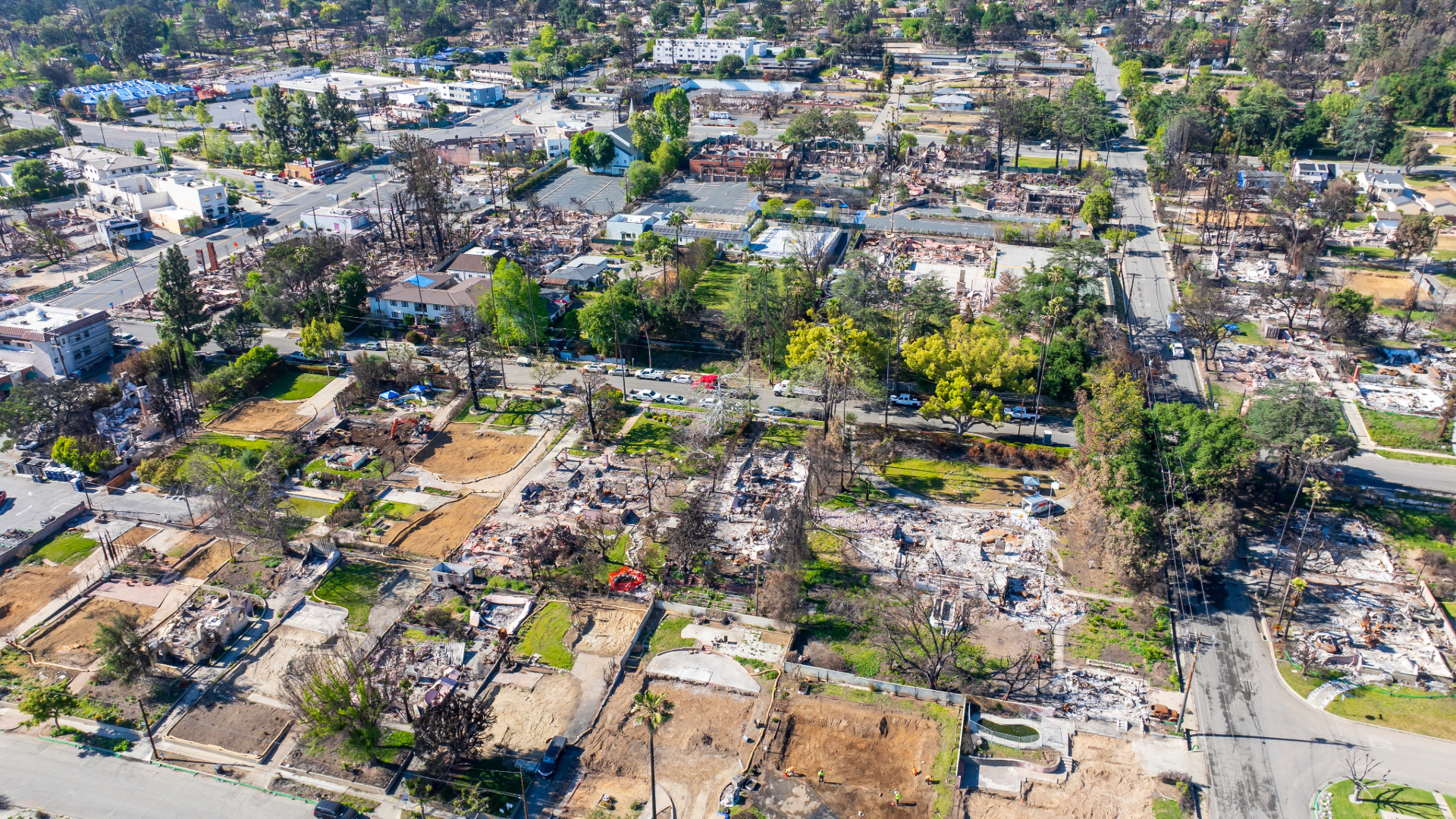
In January 2025, the Eaton Fire burned 14,000 acres and damaged or destroyed over 7,000 structures in Altadena. In the immediate aftermath, community response was overwhelming. Neighbors organized clothing drives, raised funds, and cleared debris. New grassroots organizations sprung from these efforts, including the Altadena Tenants Union, the Altadena Community Land Trust, and the Rent Brigade, laying a foundation for recovery long before formal systems were in place. These groups sought to address infrastructure gaps that government agencies hadn’t yet addressed. They held landlords accountable for rent gouging, organized mutual aid, and began advancing alternative approaches to property ownership, tenancy, and stability in Los Angeles.
But even as Altadena community members were leading disaster recovery, predatory investors were already buying up land from the vulnerable among them. Our August 2025 report showed that corporate investment had been rising before the fire, and the disaster only accelerated that trend. Since January, Altadena has seen corporate investment increase at alarming rates. As of January 4, 2026, 59% of all Altadena home purchases since the fire were made by corporate entities. More than half of the homes sold post-fire did not go to families trying to rebuild, but to investors who were able to move quickly while residents waited on basic assistance.
Recent reporting by the LA Times has captured what people in Altadena already know: organizing has, in many cases, given way to exhaustion. A group chat originally created to share evacuation updates has turned into an 8,5000 person network where residents can talk about their financial strain, paltry insurance payments and stalled claims, and fears of permanent displacement. Many have not returned home, and thousands still remain in limbo a year later.
In her 2007 book The Shock Doctrine: The Rise of Disaster Capitalism, Naomi Klein details how large-scale disasters such as the Eaton Fire create a sense of collective urgency in the short term, but public attention fades long before recovery is complete. This opens the door for corporate actors to exploit fear and chaos to promote deregulation, privatization, and the commodification of public goods. In Altadena, corporate buyers have the resources to quickly buy up lots, while those who lost their homes are still struggling to secure shelter, sort out insurance claims, and shoulder the trauma of loss. Without guardrails, these moments of crisis become opportunities for displacement.
The corporate buy up of Altadena represents a systemic failure. When the Eaton Fire began, Altadena residents did not have any existing protections to help keep housing in community hands. Without protections, the recovery was left open for corporate investors to infiltrate. And, despite the community’s best efforts, outside investors now have a heavy hand in shaping Altadena’s future.
As climate disasters become more frequent, Los Angeles County residents cannot afford to rely on ad-hoc, after-the-fact responses. We need strong policies that prevent displacement, curb speculative investments, and expand pathways for community ownership, including:
Regulation
- Prohibiting corporations from making below-market unsolicited offers to buy land in the burn area, and give homeowners the right to back out of dishonest sales made in bad faith.
Programs
- Los Angeles County should create an Altadena Community Acquisition Fund so that nonprofit community groups can acquire and hold Altadena properties that are listed for sale.
- The county should also adopt a Community Opportunity to Purchase Act (COPA) policy, giving qualified community organizations—like community land trusts, land banks, and other mission-driven entities—an opportunity to buy properties before the broader private market.
Preparing for the next disaster means building systems that keep people housed, not leaving recovery up to the private market.