

By Grace Hut, Assistant Director, Policy and Advocacy
May 27, 2026
Buildings are the largest single source of greenhouse gas emissions in the City of Los Angeles, making up 43% of total emissions. That’s why building decarbonization—the process of reducing or eliminating building emissions through electrification, energy efficiency upgrades and use of alternative energy sources—is a critical part of combating climate change. Like many cities around the country, Los Angeles is looking to reach its climate goals by adopting policies that would require building decarbonization.
What does building decarbonization mean for working-class Angelenos? The answer is complicated. Decarbonization policies have the potential to make our homes and communities much healthier and more climate resilient. This is especially true in low-income communities of color, where residents are most burdened by environmental injustices and the effects of climate change. But without smart decarbonization policies in place, there is also the risk of harm. Requiring climate upgrades in rental units, for example, could lead landlords to recoup costs through rent increases or by harassing and evicting tenants in order to raise rents.
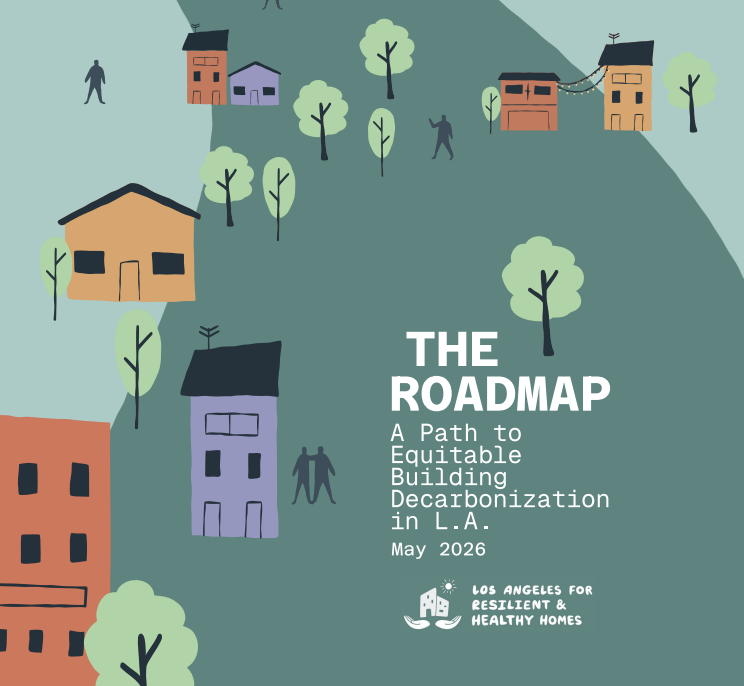
Enter the Los Angeles for Resilient and Healthy Homes (LARHH) coalition: For the last few years, SAJE and our partners in the coalition have talked about building decarbonization with community members who contend with housing and environmental injustices in their daily lives. Together, we envisioned an approach to decarbonization that advances environmental justice, preserves affordable housing, protects tenant rights, and develops a green workforce. Last week, we published “The Roadmap: A Path to Equitable Building Decarbonization in Los Angeles,” a report containing our coalition’s policy recommendations and implementation strategies for equitable building decarbonization.
We need urgent climate action. But, simultaneously, we need to take the time required to develop community-centered policies. This roadmap is a resource designed to help policymakers navigate this tension and ensure a future in which low-income people are the beneficiaries of decarbonization.