

By Cynthia Strathmann, Executive Director, Strategic Actions for a Just Economy
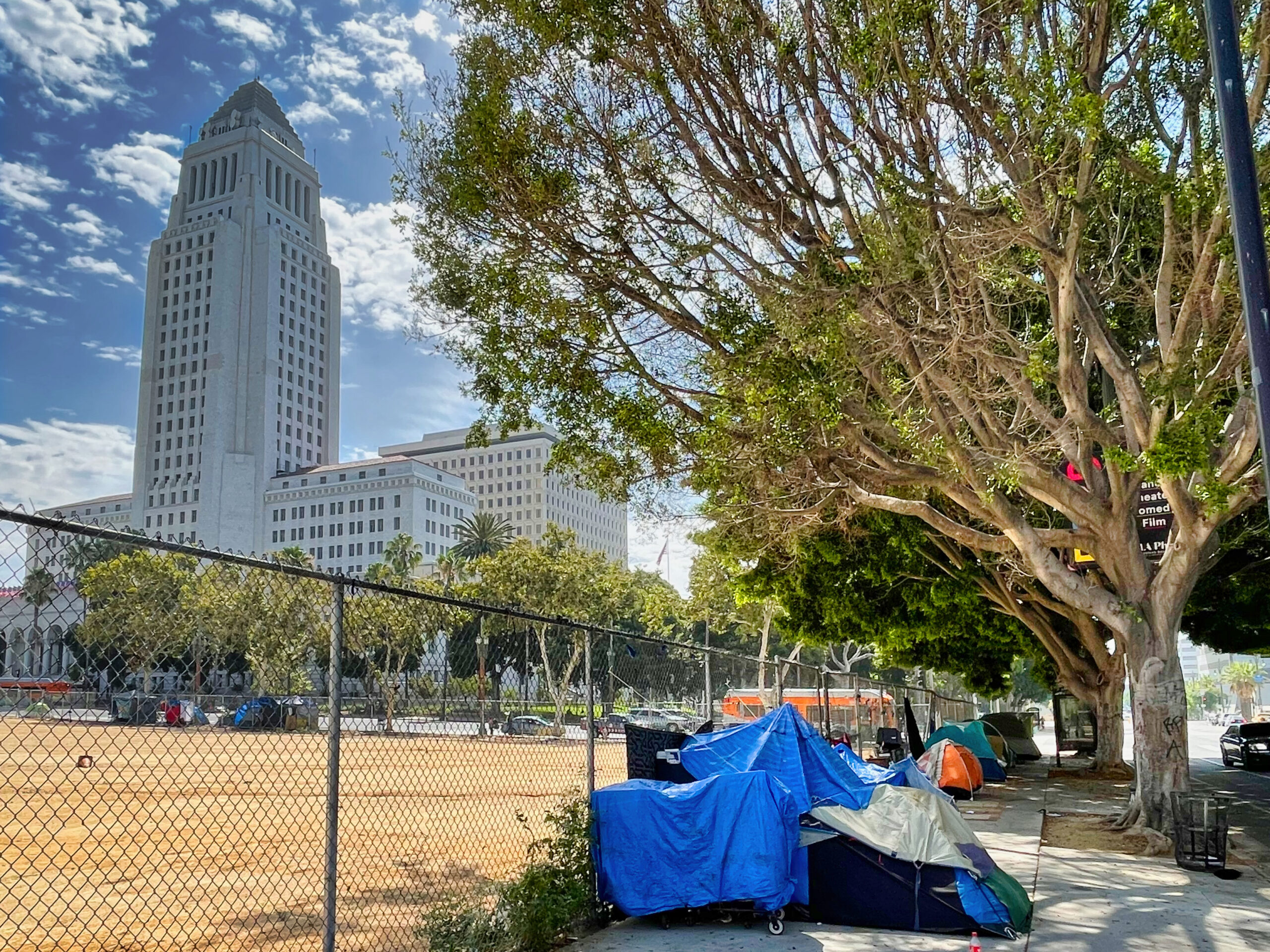
Last week, the Los Angeles Homeless Services Authority (LAHSA) announced the results of their 2026 homelessness count, and the news is not good. Homelessness rose 3.4%, with a 7.9% increase in people living outdoors or in their vehicles. There are an estimated 45,194 unhoused people living in L.A.
These numbers are tragic but unsurprising. Since 2022, the city has pinned most of its hope and at least $300 million on Inside Safe, a program that moves people from encampments into interim housing, as the way to solve its homelessness crisis. Inside Safe has met just a small fraction of need, granting provisional shelter to just 5,800 people, 40% of whom have since returned to the street.
Interim housing is a bandaid solution, a temporary stop at a motel or shelter on the way to a permanent place to live. According to its own goals, Inside Safe seeks to limit interim stays to 90 days, or until a permanent home can be identified. Currently, the average wait time is 362 days.
And therein lies the problem: Los Angeles does not have enough affordable permanent homes for everyone who needs one—not for the tens of thousands of unhoused residents we already have, nor for the thousands of households who are paying most of their wages to rent and who are just one or two payments away from becoming homeless.
Which makes it all the more baffling that some are still hesitant to lean into the only real funding source we have to be able to build affordable housing at scale.
Even embattled LAHSA agrees: our homelessness crisis is an affordable housing crisis. For decades, Los Angeles’s severe shortage of affordable housing has been exacerbated by chronic underproduction. Before the 2020s are over, Los Angeles will need to build 456,000 units—including 182,200 units for low-income households.
To meaningfully combat homelessness, the city must stimulate the production of permanent affordable housing, and quickly. Our leaders know this and have been softening the ground. In 2022, Mayor Karen Bass issued Executive Directive 1 to streamline affordable housing production. The city is also in the process of implementing a new state law, SB 79, which upzones areas around transit stations to permit multifamily housing construction. And, since April 2023, Measure ULA, a transfer tax on real estate sales, has raised $1.2 billion dollars and counting, 70% of which goes toward housing production. (The other 30% supports cost-effective strategies to prevent homelessness for those most at risk of it.)
In other words, even in spite of last week’s bad news, L.A. is finally in a position to make real progress.
Cue the critics, who claim with not much evidence ULA is slowing market-rate multifamily housing production. But market-rate housing is just one part of the equation. Decades of redlining, racial covenants, predatory lending and foreclosure practices, and the obstruction of new development in wealthier areas has created urgent demand and skyrocketing rents in low-income communities of color. More market-rate housing won’t help these communities; it takes decades for new construction to filter down to an even income distribution.
Indeed, research has shown how building homes for low-income households does not pencil out for most developers, even with tax credits and other incentives. Which is precisely why Measure ULA is so important: it’s helping developers over the finish line in ways that other programs cannot and have not. ULA’s first round of funding, released in 2025, got 795 affordable homes in nine buildings completed. This year’s round, once approved, will support 4,800 new and preserved affordable homes across 80 projects, comprising 1,528 new affordable homes and support (including repairs) for more than 2,500 more.
Building permanent affordable housing is the only way to solve our homelessness crisis. ULA is the most important tool we have to do this, and we must let it work.