

By Chris Tyler, Communications Manager
December 5, 2025
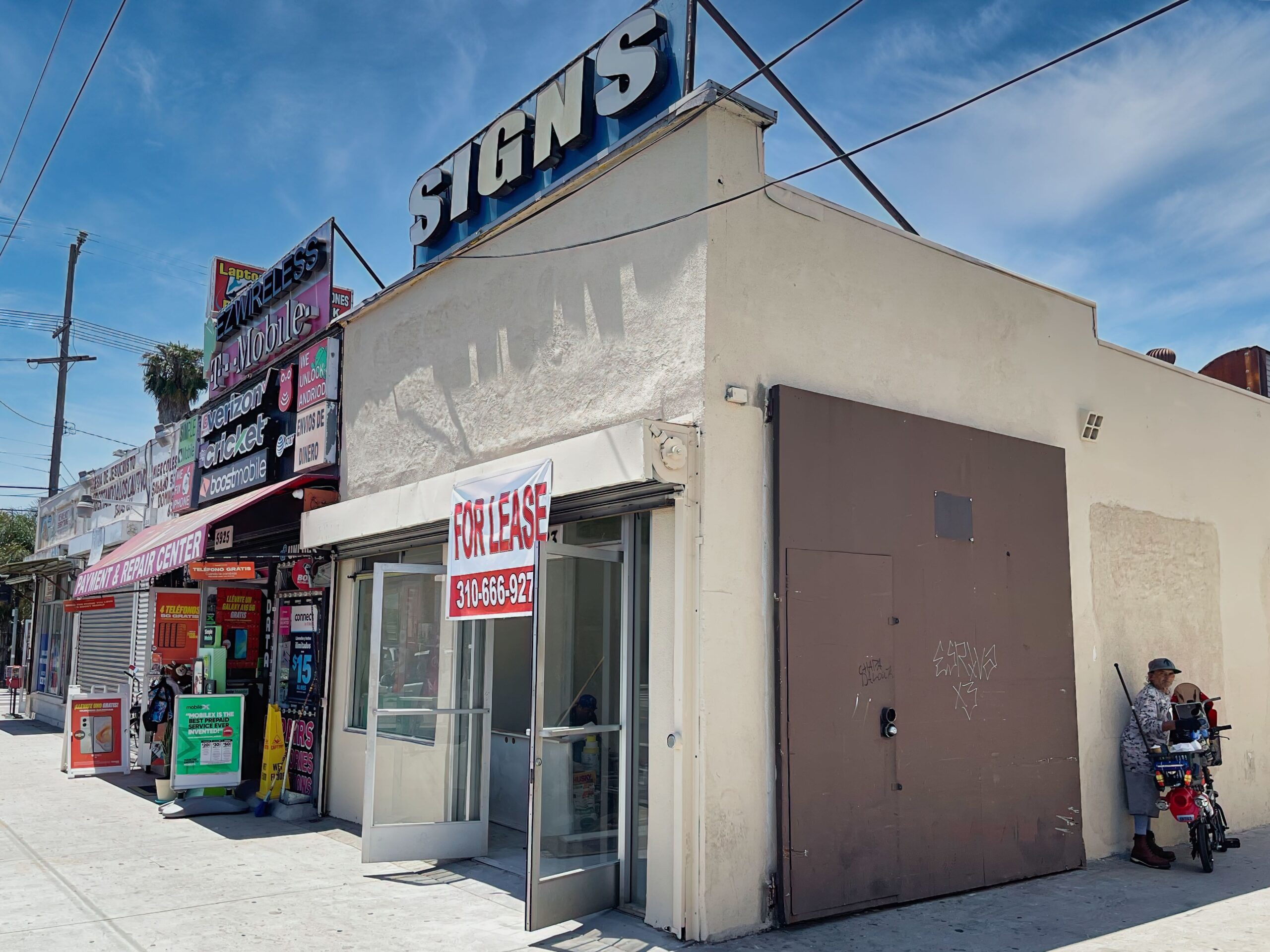
All over Los Angeles, beloved commercial tenants like Papa Cristo’s Greek Grill in Pico Union and Say Cheese in Silver Lake are shuttering because of extreme rent increases on top of other financial stressors. In September, Chinatown’s Yue Wa Market closed its doors after 18 years due to rising rents and a marked decline in customers thanks to the COVID-19 pandemic and, more recently, federal immigration raids that continue to harm small businesses across Los Angeles. It’s estimated that, between 2023 and 2024, 100,000 small businesses ceased operations in the Los Angeles-Long Beach-Anaheim area. That’s a 5.56% closure rate—the highest anywhere in the U.S.
But rents don’t just rise organically. Behind every 300% increase is a landlord choosing to make business more difficult for their commercial tenant. And, unfortunately for small business owners across California, there are no policies to stabilize commercial rents—in fact, enacting such policies here is illegal. In 1987, state legislators outlawed commercial rent-stabilization ordinances (or CRSOs) by enacting the Costa-Keene-Seymour Commercial Property Investment Act. Not only does the act ban all forms of commercial rent stabilization, but it also prevents local jurisdictions from imposing mandatory arbitration or mediation processes for commercial tenants dealing with problem landlords.
Since commercial rent stabilization is outlawed, landlords can (and often do) deliver substantial rent increases with little notice, functionally encouraging small businesses to self-evict. As detailed in the Los Angeles Times, when new owners bought Say Cheese’s building in 2021, they offered owner Glenn Harrell a “first right of refusal on a rent increase to $9,000 per month, plus operating expenses, amounting to about $12,000 a month. At the time, his monthly rent was $3,950.” (For context, imagine the rent on your studio apartment jumping from $1,450 to $4,350.) Harrell ultimately had to refuse the increase, and was displaced earlier this year when the owners identified a prospective tenant willing to pay their asking price.
This phenomenon is a major reason why, for the past two years, SAJE has focused on building a strong base of commercial tenants in South L.A. and beyond. Currently, we steward a member network of approximately 200 small business owners and host monthly Business Alliance meetings to educate commercial tenants on existing protections and their rights, collaboratively analyze the specific problems and solutions they face, and train them to organize other small business owners and represent themselves to elected officials in order to develop and pass meaningful policy. The alliance also coordinates regular trainings on empowerment, e-commerce, and business operations while providing navigation services for business owners that help them access permits, tax preparation services, and loans.
The Business Alliance is a unique space, in that it convenes a sometimes overlooked renter population to strategize around the problems they face with far fewer protections, and very different needs, than either residential tenants or larger corporate franchises. Most of the members of our Business Alliance have been displaced two to three times in the life cycle of their businesses, so building the muscle to effectively negotiate has been a core component of the alliance’s work to sustain commercial longevity. For instance, one tenant leader, who owns a barbershop in South Central, recently negotiated a significant reduction of the proposed 200% rental increase his landlord served him. Now, the landlord is refusing to pay utility bills—which the rent increase was intended to cover—leaving his barbershop without access to water. The work continues.
A new state bill, SB1103, or the Commercial Tenant Protection Act, is strengthening protections for commercial tenants and streamlining notice requirements to slow displacement. But there’s still a lot more we’d like to see take root, including additional lease protections, protections from harassment and retaliation, relocation assistance for no-fault evictions, and the repeal of the Costa-Keene-Seymour Commercial Property Investment Act and institution of commercial rent control. Without new measures enacted, the livelihoods of commercial tenants across L.A. will continue to be subject to the whims of landlords regardless of broader market trends and daily economic challenges.
If you or someone you know is interested in getting involved with SAJE’s campaign for a more equitable rental market for L.A.’s small businesses, we invite you to join our monthly Business Alliance meetings on the second Wednesday of the month. We meet right here at SAJE and also on Zoom. Meetings are currently held in Spanish, and English interpretation is available on request. To learn more, email info@SAJE.net.